
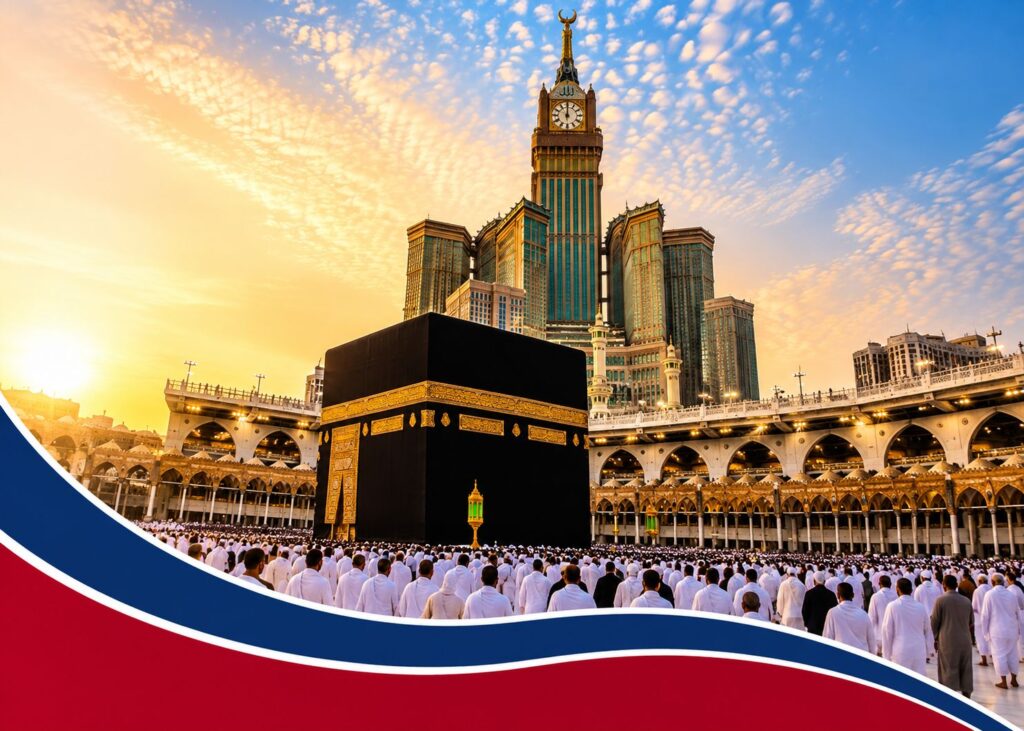
For many Muslims, performing Hajj is something they think about for years. But when the opportunity finally becomes real, excitement can quickly be joined by a long list of questions. How does a first time Hajj from USA work? What documents should you prepare? How should you get physically ready? What happens at Mina, Arafat, and Muzdalifah? What should you pack for such a demanding journey?
For U.S.-based pilgrims, Hajj requires both spiritual preparation and careful international travel planning. You are traveling thousands of miles from home and entering a pilgrimage where official requirements, movement schedules, health considerations, and religious rites all matter.
This guide from Latif Travels USA walks first-time U.S. pilgrims through the major things to understand before Hajj, from preparation and travel requirements to the main rituals, packing, safety, and practical planning.
Important: Hajj regulations, health requirements, visa procedures, permits, and official booking processes can change between seasons. Always confirm current requirements through official Saudi authorities, Nusuk Hajj, and relevant U.S. government travel guidance before making final arrangements.
How Do You Prepare for Your First Hajj from the USA?
Preparing for your first Hajj involves much more than buying a ticket and packing a suitcase.
A first-time pilgrim should understand the official Hajj process, organize required travel documents, learn the main rituals, check current health requirements, prepare physically for extensive walking, and create a practical packing plan.
It also helps to understand your accommodation, transportation, communication arrangements, and what services are included in your travel arrangements before departure.
If you are still learning how Hajj and Umrah travel works from the United States, Latif Travels USA also provides Hajj and Umrah travel services and travel guidance for U.S.-based pilgrims.
Understanding Hajj Before You Travel
Hajj is the annual pilgrimage to Makkah and one of the Five Pillars of Islam. It takes place during Dhul Hijjah and brings Muslims from around the world together for a prescribed sequence of acts of worship.
For a first-time pilgrim, understanding that sequence before leaving home can make the experience less confusing.
You will hear several terms repeatedly throughout your preparation and journey:
Ihram refers to the sacred state a pilgrim enters for Hajj, with specific intentions and restrictions.
Tawaf involves circumambulating the Kaaba seven times.
Sa’i involves walking between Safa and Marwah.
Mina is one of the principal locations associated with the days of Hajj.
Arafat is where pilgrims gather for the essential standing of Arafat.
Muzdalifah is where pilgrims proceed after Arafat.
Jamarat refers to the location where the ritual of stoning takes place.
Knowing the vocabulary is useful, but do not stop there. Before traveling, learn what each ritual means, when it is performed, and how it fits into the overall Hajj journey.
First-Time Hajj from USA: Start With the Official Process
One of the most important pieces of advice for a first-time pilgrim is simple: do not treat Hajj like an ordinary vacation to Saudi Arabia.
Hajj operates under specific Saudi regulations.
Official booking arrangements, permits, visas, health rules, package procedures, and eligibility requirements may change from one Hajj season to another. Information that was correct for a relative who performed Hajj several years ago may not necessarily apply to your journey.
For international pilgrims, Saudi Arabia’s official Nusuk Hajj system is an important source for checking the applicable Hajj process.
This is particularly important when you encounter package advertisements or information on social media. Before making a payment or commitment, understand whether the arrangement follows the official process applicable to you.
Latif Travels USA can assist U.S.-based pilgrims with preparation, travel information, and customer guidance. Official Hajj booking, payment, permits, visa approval, and related authorization remain subject to the applicable Saudi and Nusuk Hajj procedures.
Hajj Requirements for U.S. Pilgrims
Your Hajj preparation should begin with documents, not luggage.
The exact requirements applicable to you will depend on current Saudi regulations and your individual travel circumstances. Because these requirements can change, a checklist copied from an older Hajj season should never be your only source.
Passport and Travel Documents
Check your passport well before you intend to travel.
Make sure it meets the applicable validity requirements and that your personal information is accurate. Your name and other identifying details should be consistent across relevant travel and booking documents.
Keep important documents organized and accessible. Secure digital copies can also be useful if a physical document is misplaced, although they do not replace original documents where originals are required.
Hajj Visa and Official Authorization
Many first-time pilgrims search for information about a Hajj visa from the USA, but this is an area where outdated information can cause serious problems.
Hajj is subject to specific Saudi entry and authorization rules. Do not assume that a tourist visa, Umrah arrangement, or another type of Saudi entry permission automatically authorizes someone to perform Hajj.
Check the official requirements that apply to your Hajj season before traveling.
Keep Your Booking Information Organized
Keep records of your official booking arrangements, accommodation details, transportation information, emergency contacts, and any documentation required for your journey.
Do not depend entirely on your phone. Keeping essential information available offline can be helpful if you lose internet access or your device runs out of power.
Hajj Health Requirements and Vaccinations
Hajj can be physically demanding even for people who are generally healthy.
Pilgrims may spend considerable time walking and standing while also dealing with crowds, heat, changes in sleep, and a very different daily routine.
Saudi health and vaccination requirements can change from one Hajj season to another. Check the latest official health requirements well before departure so you have enough time to complete any required vaccinations and obtain necessary documentation.
If you have diabetes, heart disease, respiratory problems, mobility limitations, or another ongoing medical condition, speak with a qualified healthcare professional about your individual circumstances before traveling.
If you regularly take prescription medicine, plan carefully. Bring an appropriate supply for the journey and keep essential medication accessible.
How to Prepare Physically for Hajj
Hajj is not the ideal place to discover that you are uncomfortable walking for extended periods.
Start preparing your body before departure.
Regular walking is one of the simplest ways to begin. Build your endurance gradually rather than suddenly attempting long distances. Become comfortable spending more time on your feet and wearing suitable footwear.
Your preparation should also include sleep, hydration, nutrition, and recovery.
The goal is not athletic performance. The goal is to help your body cope with a journey that may involve extensive walking, waiting, standing, heat, and irregular rest.
Older pilgrims and people with existing medical conditions should prepare according to their own abilities and professional medical advice rather than copying someone else’s fitness routine.
Spiritual Preparation for Your First Hajj
It is easy to become so focused on passports, luggage, hotels, and flights that the purpose of Hajj gets pushed into the background.
Your spiritual preparation deserves at least as much attention as your travel preparation.
Study the main Hajj rituals before leaving the United States. Understand why you are entering Ihram, what happens at Arafat, the purpose of Tawaf and Sa’i, and the sequence of the major rites.
For detailed questions of Islamic jurisprudence, seek guidance from qualified scholars rather than relying only on short social media videos.
Prepare for dua and dhikr, but there is no need to turn every moment into a complicated checklist. Make space for sincere repentance, reflection, patience, and personal dua.
Before leaving, it can also be wise to review responsibilities at home, including family matters, financial obligations, debts, and other commitments that require attention.
Hajj Step by Step: Main Rituals First-Time Pilgrims Should Understand
A Hajj step-by-step guide can help you understand the overall journey, but the detailed sequence can vary depending on the type of Hajj being performed and relevant Islamic rulings.
The following is therefore an overview rather than a substitute for qualified religious instruction.
Entering Ihram
Ihram is not simply the two pieces of white cloth commonly associated with male pilgrims. It is a sacred state entered with intention, and it comes with particular rules and restrictions.
Pilgrims need to understand the relevant Miqat and when they should enter Ihram according to their route.
This deserves special attention for people flying from the United States because your journey may involve a long international flight or connections. Learn what applies to your itinerary before you board rather than trying to work it out at the last minute.
Mina
Mina plays an important role during the days of Hajj.
Large numbers of pilgrims are accommodated and moved according to organized arrangements. Follow official instructions and understand where your designated accommodation and group are located.
Patience becomes particularly important here. Movement involving very large numbers of people does not always happen at the pace you might expect.
Arafat
The Day of Arafat is one of the most significant moments of Hajj.
Pilgrims gather at Arafat in worship, remembrance, repentance, and dua. Instead of arriving without knowing what to expect, learn about the significance of Arafat beforehand.
Preparing spiritually for this day can help you focus on worship when you are there.
Muzdalifah
After Arafat, pilgrims proceed to Muzdalifah according to the prescribed Hajj sequence.
By this point, you may already be physically tired. This is one reason why physical preparation, simple packing, and realistic expectations are so valuable.
Jamarat
The Hajj rites also involve the symbolic stoning at the Jamarat.
Because many pilgrims may be moving through the area, follow the applicable schedule, designated routes, and official crowd-management instructions rather than trying to create your own shortcut or timetable.
Tawaf
Tawaf involves circumambulating the Kaaba seven times.
The spiritual experience can be profound, but first-time pilgrims should also be prepared for the practical reality of performing rituals in a busy environment.
Learn the relevant rulings and sequence before Hajj so that you can focus more fully on worship.
Sa’i
Sa’i is performed between Safa and Marwah.
It consists of seven passages beginning at Safa and ending at Marwah. Although the route is organized for pilgrims, Sa’i adds to the overall physical demands of the pilgrimage.
Again, understanding the ritual before arriving helps reduce uncertainty.
Hajj Packing List for Pilgrims Traveling from the USA
The best Hajj suitcase is not necessarily the one that contains the most things.
Packing too much creates another problem: you have to manage everything you bring.
A practical Hajj packing list may include:
- Passport and required travel documents
- Copies or secure backups of important information
- Ihram garments where applicable
- Appropriate everyday clothing
- Comfortable footwear
- Necessary prescription medication
- Personal hygiene essentials
- A manageable day bag
- Phone and suitable charging equipment
- Identification and emergency contact details
- Basic first-aid necessities
- Other personal essentials appropriate to your needs
Keep essential medication, identification, and important documents somewhere accessible during travel rather than buried deep inside checked luggage.
Before packing, check current airline baggage policies and applicable Saudi restrictions.
Hajj Travel Safety Tips for U.S. Pilgrims
Crowds are part of the reality of Hajj. Good preparation means knowing how you will respond if you become separated from your companions or cannot immediately find your accommodation.
Keep important phone numbers and accommodation details available offline. Agree on meeting points with family members or companions where appropriate.
Follow official routes, security instructions, transportation schedules, and crowd-control guidance.
Heat is another serious consideration. Follow current health guidance, pay attention to hydration, and do not assume that your normal walking pace in the United States will be appropriate under different weather and crowd conditions.
U.S. citizens should also review current U.S. government travel information before departure and monitor relevant updates during their trip.
Performing Hajj With Elderly Parents or Family
Traveling with elderly parents can make Hajj especially meaningful, but it also requires additional planning.
Before departure, discuss mobility, medication, walking ability, medical conditions, rest requirements, and the type of assistance your family member may need.
Accommodation and transportation arrangements can become particularly important for someone with limited mobility.
Have a simple communication plan. Large crowds can separate family members even when everyone is trying to stay together. Make sure each person knows important contact information and what to do if separated.
Most importantly, plan around the capabilities of the person who needs the most assistance rather than expecting everyone to maintain the same pace.
How Much Does Hajj from the USA Cost?
There is no single Hajj cost from USA that applies to every pilgrim.
The overall amount can vary according to the official package selected, accommodation, room-sharing arrangement, transportation, length of stay, airfare where applicable, and the services included.
This is why comparing only the headline price of different Hajj packages from USA can be misleading.
When evaluating an arrangement, understand what is actually included. Consider accommodation details, transportation, room occupancy, meals where applicable, and other included services.
You can review available Hajj package information from Latif Travels USA while researching your travel options.
Avoid treating a price from an older Hajj season as a guaranteed estimate for a future season. Hajj package structures and costs can change.
How to Evaluate Hajj Travel Support Before Booking
For a first-time pilgrim, support and clear information can be just as important as price.
Before making a decision, ask practical questions.
What services are included? What accommodation arrangements apply? How does transportation work? What is the room-sharing arrangement? Who should you contact when you need assistance? What part of the process is handled through official Saudi channels?
The answers should be understandable before you commit financially.
You can explore the Hajj and Umrah travel services offered by Latif Travels USA and read pilgrim reviews as part of your research.
You can also view the Hajj and Umrah travel gallery to learn more about Latif Travels USA.
Common First-Time Hajj Mistakes to Avoid
First-time pilgrims sometimes spend months thinking about the trip but leave some of the most important preparation until the final weeks.
One common mistake is relying on old visa, permit, or health information. Hajj regulations can change, so verify current requirements.
Another is waiting until arrival to learn the rituals. Hajj becomes much easier to follow when terms such as Ihram, Arafat, Muzdalifah, Jamarat, Tawaf, and Sa’i are already familiar.
Overpacking is another avoidable problem. Every unnecessary item becomes something you need to transport and organize.
Other mistakes include poor physical preparation, failing to organize medication, not keeping emergency information accessible, and choosing travel arrangements without understanding what is included.
Perhaps the biggest practical mistake is expecting every stage to happen exactly according to your preferred schedule. Hajj involves enormous crowds, coordinated movement, waiting, fatigue, and circumstances you cannot always control.
Patience is not simply useful during Hajj; it is essential.
First-Time Hajj Checklist Before Leaving the USA
A few weeks before departure, review your preparation in four areas.
Travel and documents: Confirm your passport, applicable official Hajj documentation, booking information, itinerary, accommodation details, and emergency contacts.
Health: Verify current health and vaccination requirements, organize prescription medication, discuss relevant health conditions with your healthcare professional, and continue physical preparation.
Religious preparation: Review Ihram, the sequence of Hajj, major rituals, important duas, and any religious questions you still need to clarify.
Practical preparation: Finalize your luggage, communication plan, access to money or payment methods, phone arrangements, important addresses, and document backups.
Do this early enough that discovering a missing document or unresolved question does not become a last-minute emergency.
How Latif Travels USA Supports Pilgrims
First-time Hajj travelers often have questions that go beyond a simple booking. They want to understand the journey, prepare properly, and know where to find travel-related guidance.
Latif Travels USA provides Hajj and Umrah travel information, preparation assistance, and customer guidance for U.S.-based pilgrims.
You can learn more about Latif Travels USA, review available Hajj information, or explore Hajj and Umrah travel services.
If you are considering Umrah as well, you can explore the available Umrah packages.
For a closer look at previous travel activities, visit the Hajj and Umrah travel gallery and read pilgrim reviews.
When you are ready to discuss your travel needs, contact Latif Travels USA.
Frequently Asked Questions About First-Time Hajj from USA
How do I prepare for my first Hajj from the USA?
Start by understanding the official Hajj process and checking current Saudi travel requirements. Then focus on learning the rituals, preparing physically, organizing travel documents, checking health requirements, arranging necessary medication, and packing appropriately.
What are the Hajj requirements for U.S. pilgrims?
Requirements can vary by Hajj season and individual circumstances. U.S.-based pilgrims should verify current passport, official Hajj authorization, visa, health, booking, and travel requirements through the appropriate official Saudi channels before departure.
Do I need a special visa or authorization for Hajj?
Hajj is subject to specific Saudi authorization and entry requirements. Pilgrims should not assume that another type of Saudi visa automatically permits Hajj. Always verify the rules applicable to your Hajj season through official sources.
What vaccinations do I need for Hajj from the USA?
Saudi health and vaccination requirements can change. Check the latest official Saudi health guidance before your trip and speak with a healthcare professional about your personal medical needs.
How much does Hajj cost from the USA?
There is no single fixed cost for every U.S. pilgrim. The total can depend on the applicable Hajj package, accommodation, room sharing, transportation, trip duration, airfare where applicable, and included services. Use current verified information when comparing costs.
What should I pack for my first Hajj?
Prioritize required documents, appropriate clothing and Ihram items, comfortable footwear, prescription medication, personal-care essentials, a small day bag, charging equipment, emergency contacts, and other necessities. Avoid packing more than you can comfortably manage.
When should I enter Ihram when traveling from the USA?
The correct timing depends on your route, Miqat, itinerary, and relevant religious rulings. Because travelers from the USA may cross the Miqat while flying, learn what applies to your journey before departure and seek qualified religious guidance if you are uncertain.
Should I learn the Hajj rituals before traveling?
Yes. Understanding the main Hajj rituals before departure can reduce confusion and help you focus on worship. Learn the sequence and seek qualified guidance for detailed religious questions.
Where should U.S. pilgrims check current Hajj information?
Use official Saudi Hajj resources, including Nusuk Hajj, for current Hajj procedures. U.S. citizens should also review current U.S. Department of State travel and safety guidance relevant to Hajj and Saudi Arabia.
Final Thoughts
Your first time Hajj from USA will likely be unlike any other journey you have taken.
There are documents to organize, health requirements to check, rituals to learn, long walks to prepare for, and travel arrangements to understand. But preparation is not about trying to control every moment of Hajj.
It is about arriving as ready as reasonably possible so that logistical uncertainty does not distract unnecessarily from the purpose of the pilgrimage.
Learn before you leave. Prepare your body as well as your luggage. Verify changing requirements through official sources. Understand the main Hajj rituals instead of trying to memorize everything at the last minute.
And throughout the process, keep the spiritual purpose of the journey at the center of your preparation.
For additional travel information, explore Hajj package information or contact Latif Travels USA to discuss your Hajj travel needs.